Field notes from Boston Tech Week, New York Tech Week, and the Bay Area
Over the past two weeks, I found myself moving between Boston and New York during Tech Week season, before returning home to the Bay Area.
Along the way, our team hosted a series of events ranging from founder roundtables and private dinners to GTM discussions, coffee meetups, and a founder showcase. While the events themselves were rewarding, what stayed with me afterward wasn't any single session or conversation. It was how differently startup ecosystems operate—and how those differences show up not just in industries or funding patterns, but in the way founders think, ask questions, and even show up in a room.
It's been a while since the last Baker's Debrief.
A few weeks ago, I found myself moving between Boston Tech Week and New York Tech Week. While the events were different, the contrast between the conversations was even more interesting.
The experience became a reminder that startup ecosystems don't just differ in size or sector. They often operate on entirely different clocks.
Different Ecosystems Move at Different Speeds
One of the clearest differences I noticed was the type of questions founders were asking.
In Boston, we hosted a highly interactive roundtable that ran well over time. Keeping the discussion on schedule proved nearly impossible—not because people were distracted, but because they were deeply engaged.
Many of the questions centered around startup fundamentals:
When is the right time to reach out to investors?
What metrics matter at the earliest stages?
How do you validate an idea before fundraising?
What does an investor committee actually look for?
The conversations felt less about scaling and more about company formation.
This makes sense when viewed through the lens of Boston's ecosystem. Many founders came from research-heavy backgrounds, and a significant portion of the companies represented were in biotech, life sciences, aviation, and other deep-tech sectors. Some founders were still at the idea stage, while others were working through the long process of commercialization.
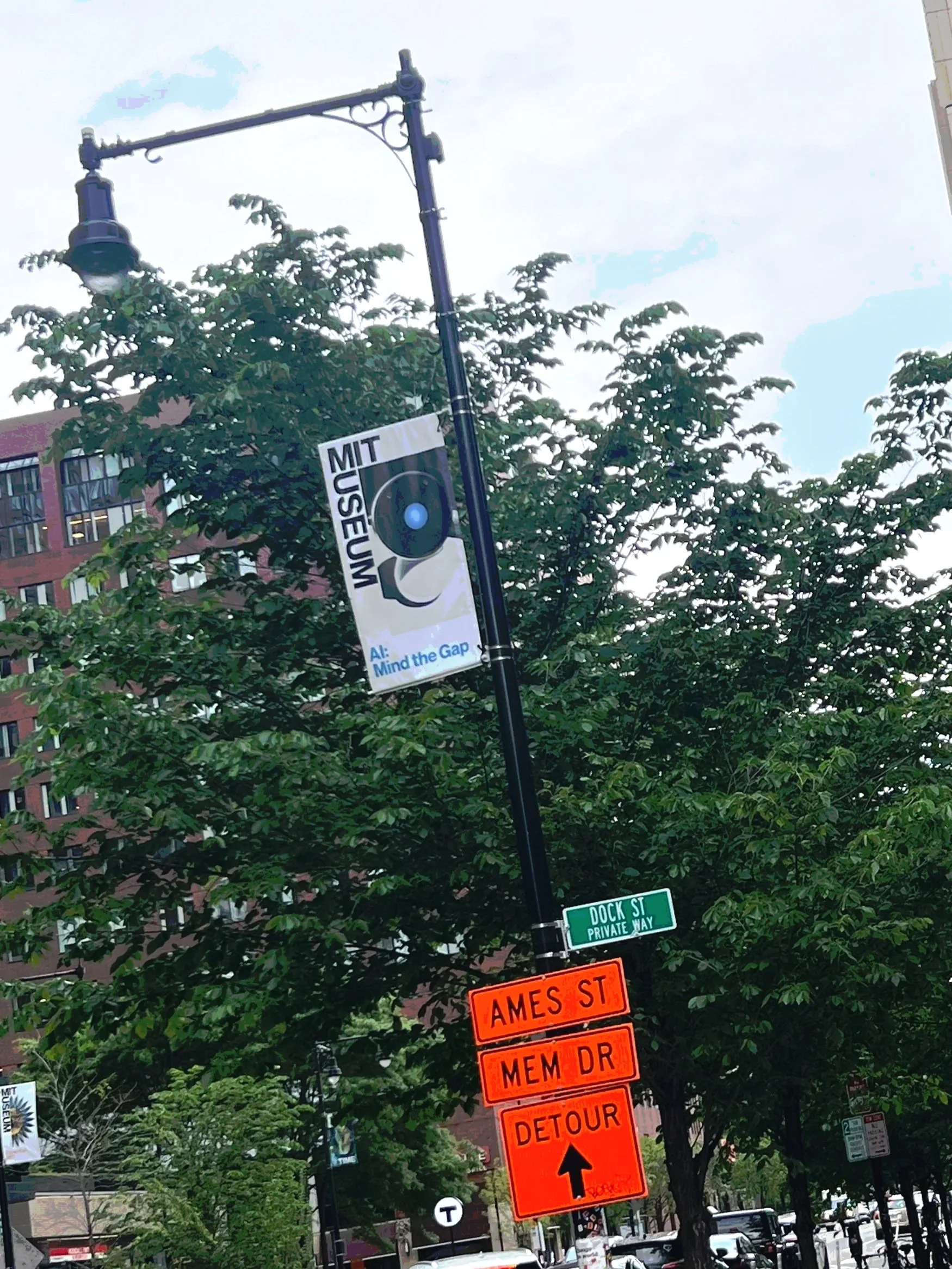
"AI: Mind the Gap," an exhibition at the MIT Museum, spotted during Boston Tech Week. In a city built around research, discovery, and commercialization, the title lingered with me longer than I expected.
In many cases, the challenge wasn't how to grow a startup. It was how to turn a breakthrough, a technology, or a research project into a company in the first place.
One detail that stood out was the geographic draw of the ecosystem. We met founders who had traveled from places like San Diego—another major biotech hub—to attend events in Boston. Geography may matter less than it used to, but industry clusters still matter a great deal.
Boston remains one of those places where people gather when they're building at the intersection of science, research, and commercialization.
New York Optimizes for Execution
New York felt different.
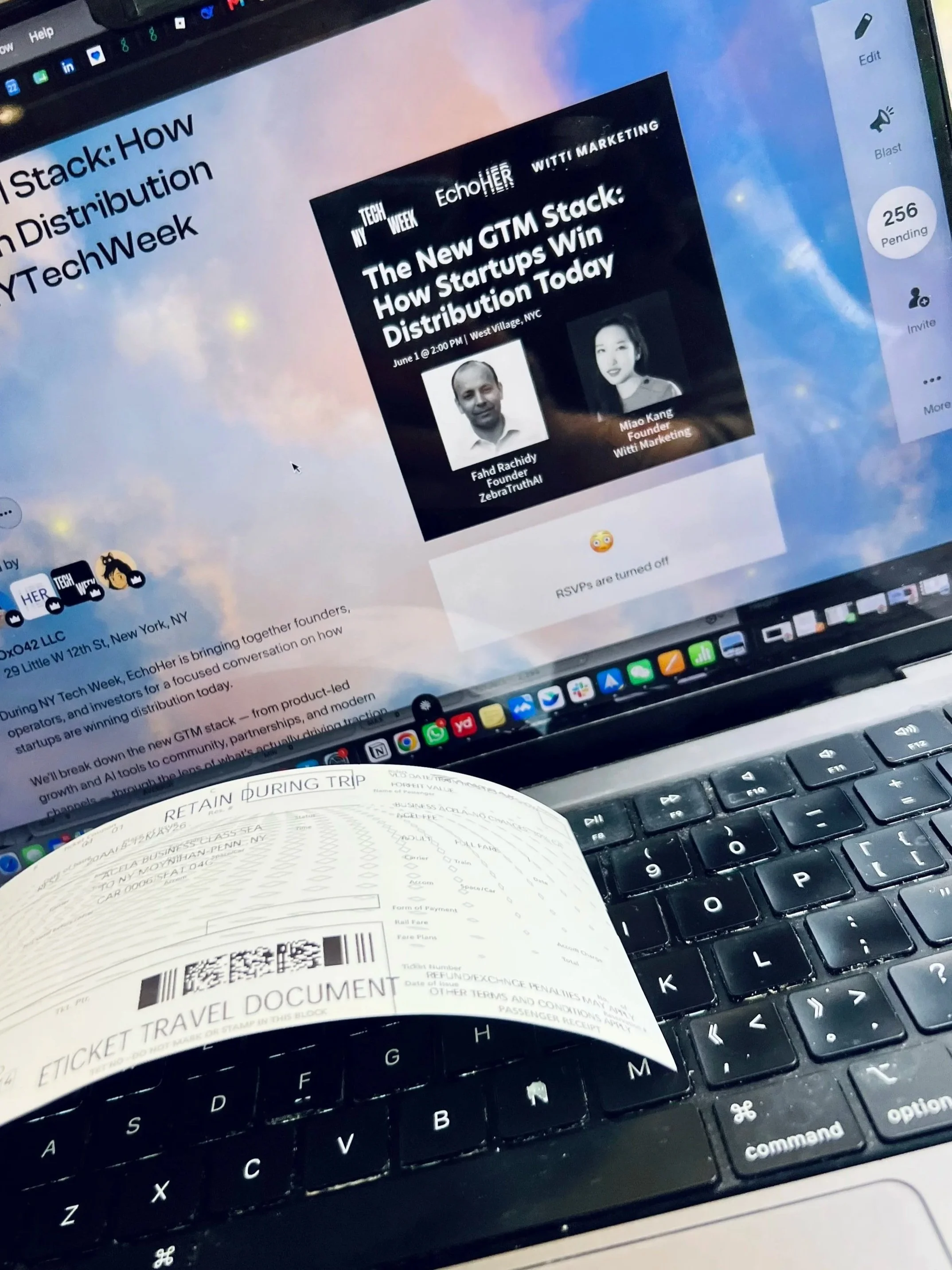
Final event checks somewhere between Boston and New York. By the time the train arrived, registrations had already exceeded capacity for several of our events—and people were still asking if there was room to join.
Across the events we hosted, demand was consistently strong. Even after registrations closed, people continued reaching out asking if there was still room to join.
In fact, the response was strong enough that we added a casual side event—a coffee hangout in Bryant Park—to create another opportunity for people to connect.
Interestingly, it didn't attract the same level of attention as the private dinner, GTM roundtable, or founder showcase. While a smaller group joined us, the gathering ended up feeling more intimate and relaxed. It was a reminder that not all community formats resonate equally, especially during a week when attendees are balancing dozens of competing events across the city.
The contrast was interesting. While highly curated and structured gatherings quickly filled up, a casual, open-ended meetup required a different kind of commitment. New York Tech Week isn't just about demand—it's also about attention. With hundreds of events happening across a few days, everyone is constantly making trade-offs about where to spend their time.
One of the most interesting sessions was a GTM roundtable featuring two founders with very different perspectives.
One was a serial B2B entrepreneur who had previously built and exited multiple companies and is now building another AI startup. The other worked closely with consumer startups, helping them build traction and develop repeatable growth strategies.
The audience was primarily founders and GTM operators. More than two-thirds of the room were actively building companies.
What struck me was how focused the discussion remained.
The questions were sharp and practical:
How do you acquire early customers?
Which channels are actually working?
How do you know when you've found product-market fit?
When should a founder stop doing everything themselves?
The room was just as interactive as Boston, but the conversation lived at a different stage of the company-building journey.
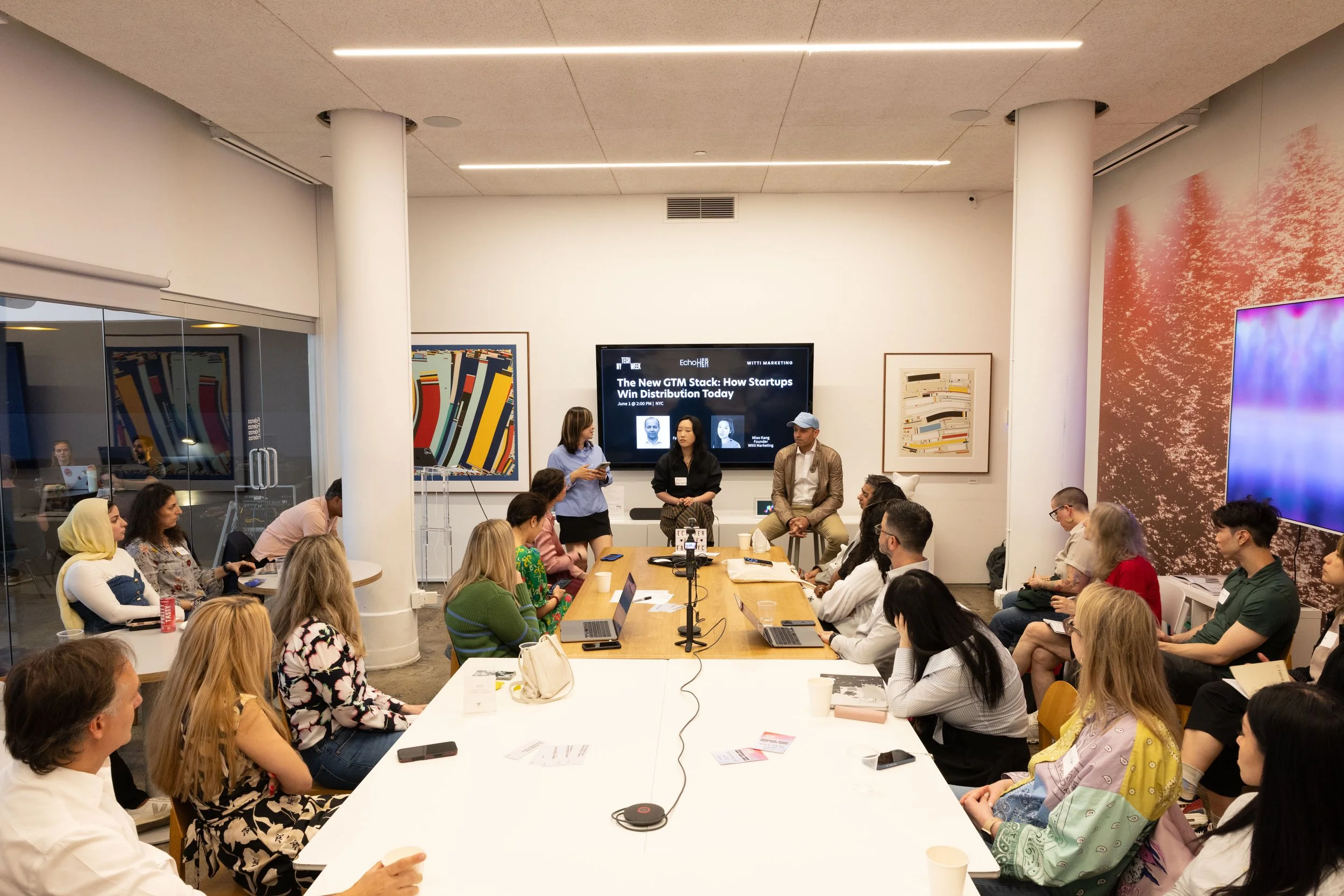
The New GTM Stack roundtable brought together founders, operators, and growth leaders to compare notes on distribution, customer acquisition, and what still works in an increasingly AI-driven landscape.
The emphasis wasn't on how to start.
It was on how to execute.
Industry Shapes Founder Behavior
The startup mix reflected these differences as well.
In Boston, many conversations revolved around sectors with long development cycles: biotech, aviation, deep tech, and research-intensive companies. Technical validation often comes before customer acquisition.
In New York, the founder showcase featured a much broader range of industries.
The startups represented healthcare, fintech, consumer products, education, community platforms, hardware, and AI-enabled applications. Compared with many Bay Area startup gatherings, there was also a noticeably stronger presence of women and non-binary founders.
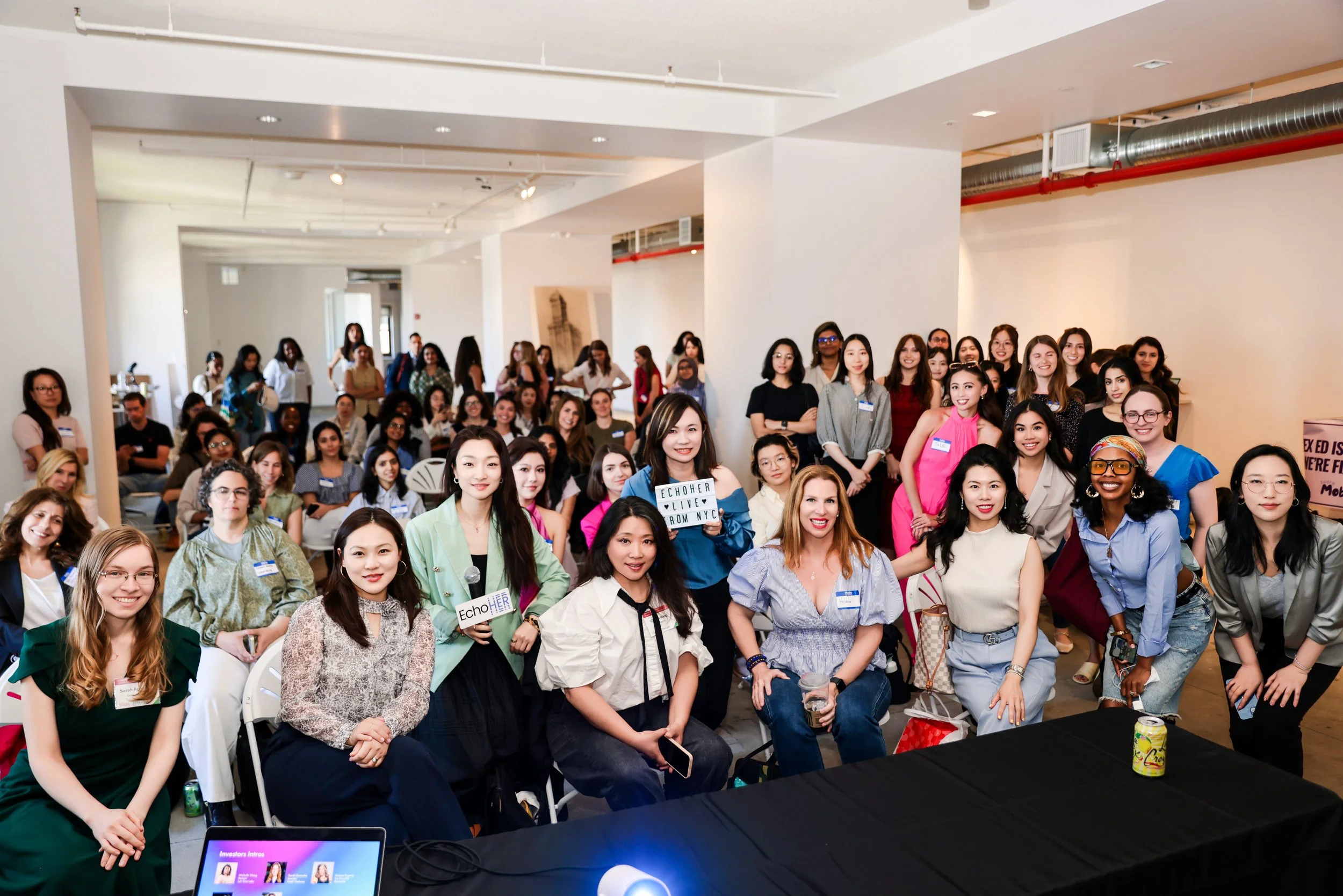
Founders, operators, investors, and community members gathered during the showcase. One thing that stood out throughout New York Tech Week was the strong presence of women and non-binary founders building across healthcare, fintech, consumer products, education, community platforms, and AI-enabled applications.
What connected many of these companies was not a shared technology stack, but a shared focus on solving existing market problems.
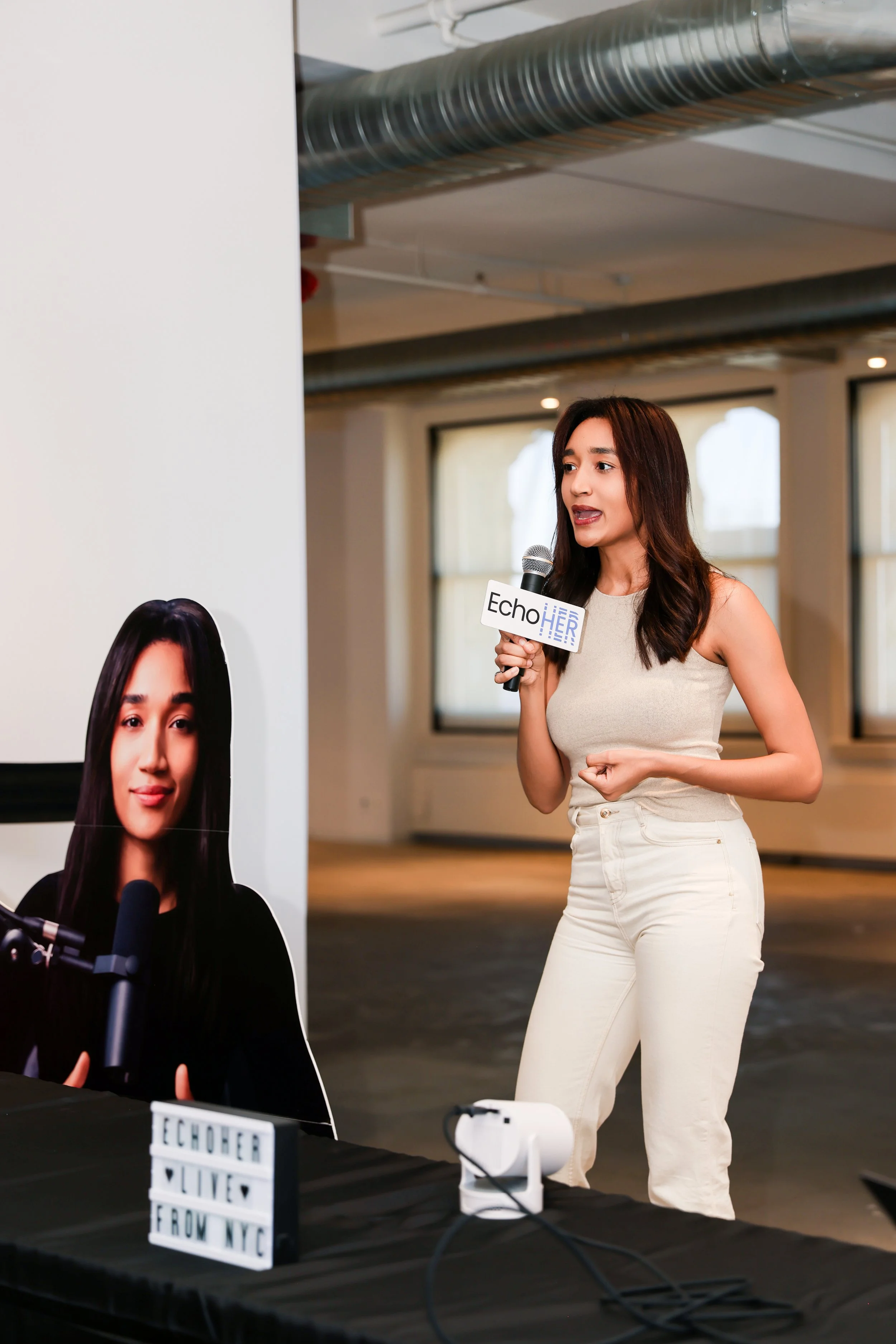
One of the founders presenting at the showcase. Across many of the startups we met, AI was treated less as the destination and more as a tool to improve an existing product, workflow, or customer experience.
Many founders were using AI as an enabling technology rather than treating AI itself as the product.
The conversation often sounded like:
"How can AI improve this experience?"
"How can AI make this workflow more efficient?"
"How can AI help us serve customers better?"
That felt different from many Bay Area conversations, where founders are frequently building the infrastructure, platforms, developer tools, and foundational technologies that others will build on top of.
A simple way to think about it:
Boston often focuses on commercializing research.
New York often focuses on applying technology to existing markets.
The Bay Area often focuses on creating the technology itself.
Of course, there are exceptions everywhere, but the pattern showed up often enough to feel real.
Beyond Technology: The Experience Matters
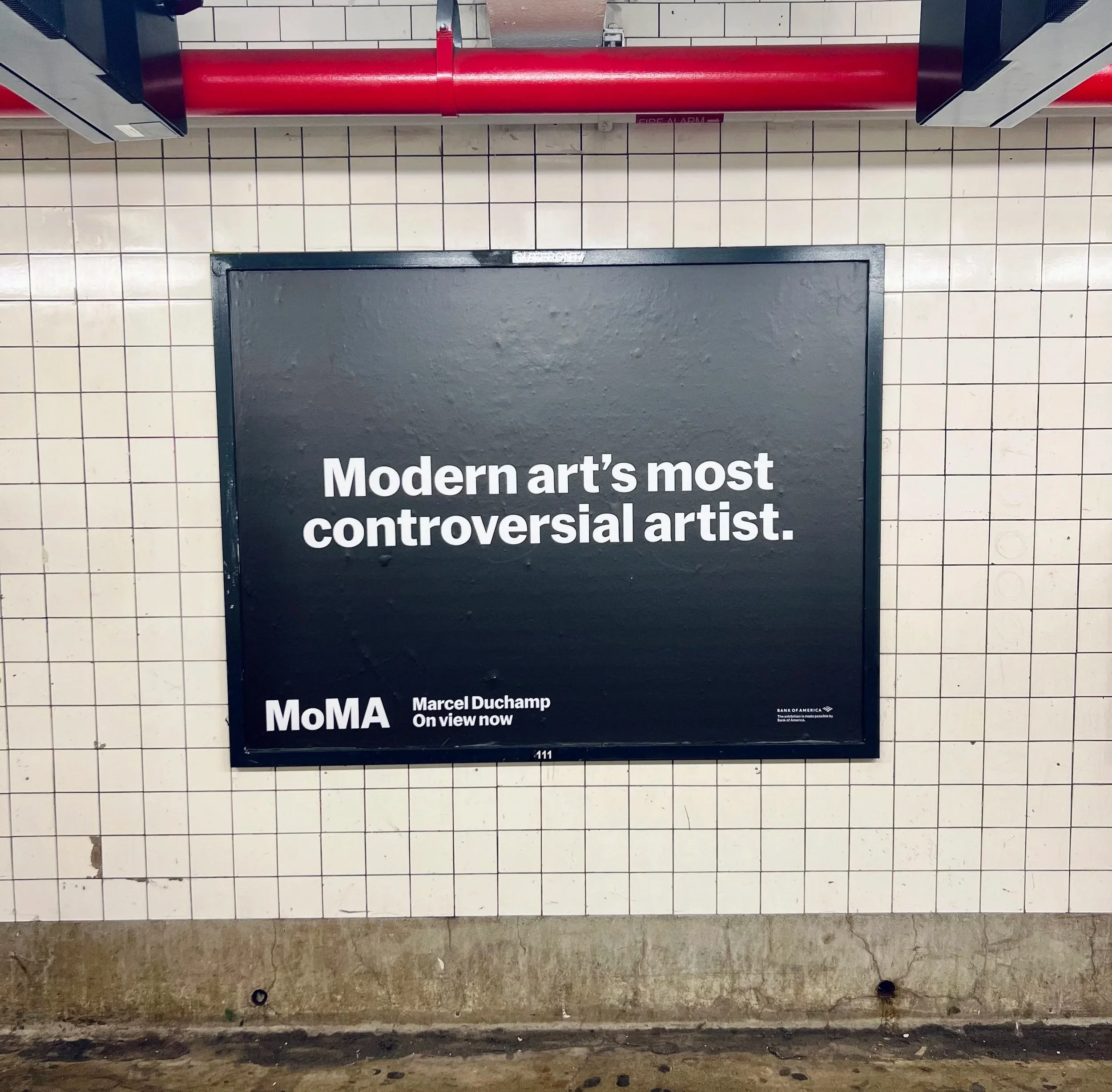
A subway poster for Marcel Duchamp's exhibition at MoMA, captured during this trip. Years ago, I came to New York for museums, galleries, and curatorial field trips. This time, I came for founders, investors, and startup communities. Somehow, the city still feels familiar.
One observation surprised me more than any discussion about fundraising, AI, or go-to-market strategy.
Whenever I travel to the East Coast, I find myself reaching for a different part of my wardrobe—the pieces I jokingly think of as my "art world closet."
It reminds me of an earlier chapter of my career, when many of my trips to New York revolved around museums, galleries, design events, and curatorial field trips rather than startup conferences and founder gatherings.
Years ago, I would come to New York to spend entire days moving between exhibitions. This time, I was here for founder dinners, GTM discussions, and startup showcases.
Yet somewhere between a subway poster for Duchamp, a founder dinner, and a startup showcase hosted in the Woolworth Building, I was reminded that New York has always blurred the boundaries between industries.
The city seems unusually comfortable holding multiple identities at once: art and business, culture and technology, storytelling and execution.
Perhaps that's why the experience-first approach felt so natural here.
Our private founder dinner was hosted at One Wall Street, one of New York's iconic landmarks, directly across from the New York Stock Exchange. The founder showcase took place in the Woolworth Building, in a space that felt closer to a gallery than a traditional startup venue. Artwork surrounded the room. Architectural details became part of the atmosphere.
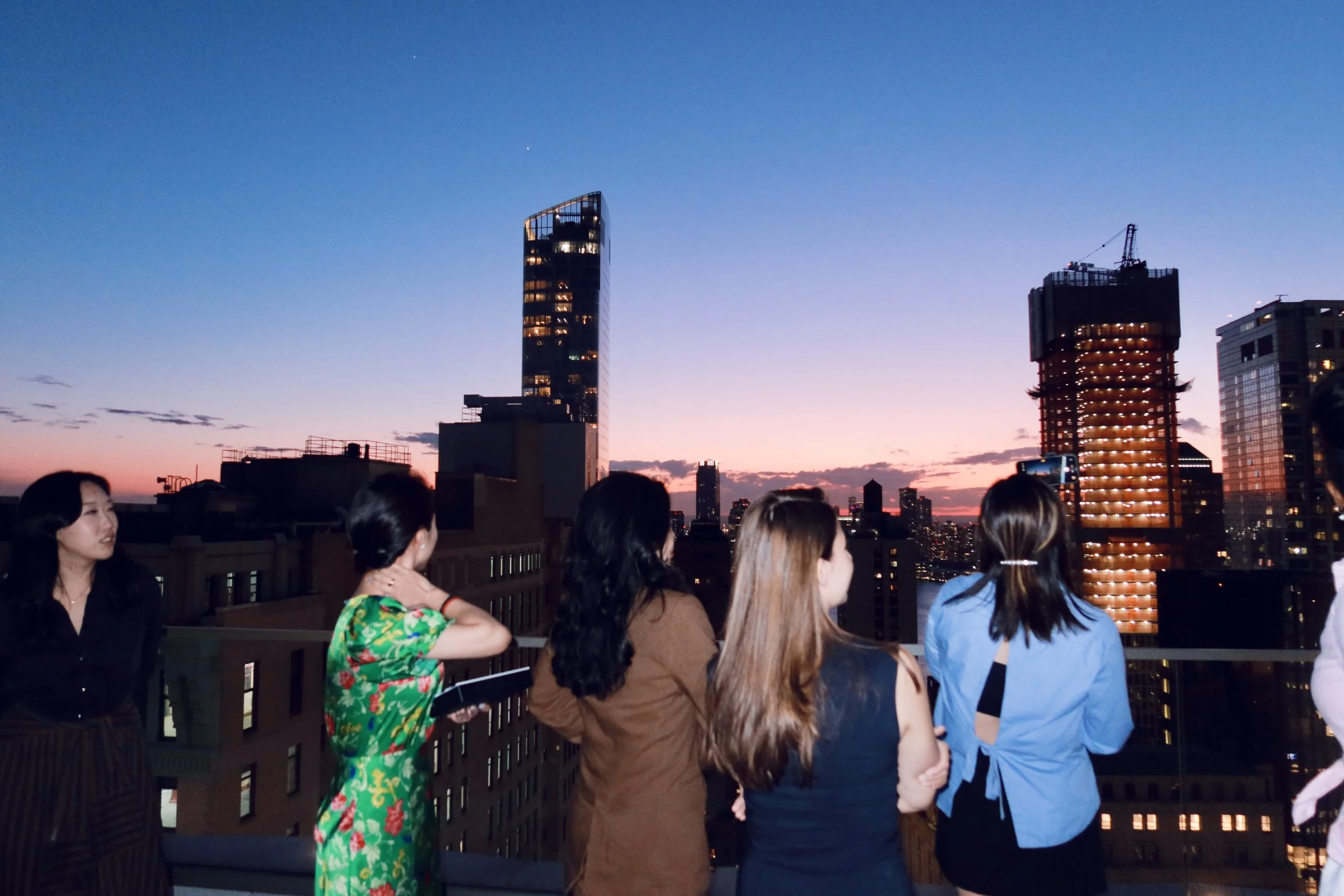
Sunset from One Wall Street during New York Tech Week. In New York where culture, capital, and creativity often overlap, the setting can become part of the conversation.
What struck me wasn't the venues themselves.
It was how natural they felt.
Nobody questioned why a startup event would take place in spaces with artistic, historical, or financial significance. Founders, investors, and operators seemed completely comfortable moving between conversations about fundraising, product strategy, culture, design, and experience.
In the Bay Area, startup events are often intentionally functional. A coworking space, a conference room, an office—these spaces serve as infrastructure for the conversation.
In New York, the venue itself often feels like part of the story.
The same pattern appeared in the founders themselves.
Compared to what I typically see in Silicon Valley, many founders and startup teams in New York appeared more dressed up and presentation-conscious, especially for pitch events. Not formal in a corporate sense, but intentional.
The way they presented themselves felt connected to the way they presented their companies.
Technology mattered.
But so did storytelling.
So did experience.
So did how people felt in the room.
Even as the reasons for my trips have changed, the city itself feels surprisingly familiar.
Small Signals
The biggest differences between ecosystems don't always show up in funding reports.
Sometimes they show up in surprisingly small ways.
For our events, we prepared a mix of refreshments, including healthy snacks, fruit, crackers, and kettle corn.
In the Bay Area, I've learned that blueberries and nuts usually disappear first.
This time, the opposite happened.
The crackers and kettle corn vanished.
The blueberries came home with us.
It's hardly scientific, but it made me laugh.
The same way clothing choices, venue preferences, and conversation styles reveal something about local culture, maybe snack tables do too.
Information Is Abundant. Context Is Not.
One pattern emerged across both Boston and New York.
The events that generated the strongest interest weren't necessarily the largest. They were the ones built around focused conversations, experienced operators, and carefully curated rooms.
During Tech Week, attendees have no shortage of options. There are countless panels, workshops, happy hours, and networking events competing for attention. Yet the events that consistently generated the strongest response were the ones with a clearly defined audience, a focused topic, and a sense of intentionality behind who would be in the room.
This was particularly noticeable during the GTM roundtable. One of our speakers had already built and exited multiple companies and was now building another AI startup. The other worked closely with founders on early traction and growth. Neither session offered information that couldn't, in theory, be found online.
Yet people still showed up.
They asked thoughtful questions. They stayed after the official program ended. They compared notes with one another. Some continued the conversation over coffee. Others made introductions that will likely outlast the event itself.
It reminded me of something I've been thinking about lately.
AI has made information easier to access than ever. Answers are increasingly abundant. What remains scarce is context.
Founders aren't just looking for knowledge. They're looking for perspective. They're looking for pattern recognition. They're looking for the chance to test an idea against someone else's experience and see what comes back.
Perhaps that's why curated gatherings continue to matter.
In a moment when every founder has access to the same tools, the differentiator may not be information itself, but the conversations that help people make sense of it.
That's a thought I'll probably explore more in a future Baker's Debrief.
Final Thoughts
After two weeks of conversations across Boston, New York, and the Bay Area, my biggest takeaway wasn't that one ecosystem is stronger than another.
It was that different ecosystems are solving different problems.
Boston asks how to turn research into companies.
New York asks how to turn products into businesses.
Silicon Valley asks how to push technology forward.
Different clocks. Different rhythms.
Yet the founders building in all three places are ultimately trying to solve the same problem: how to create something meaningful.
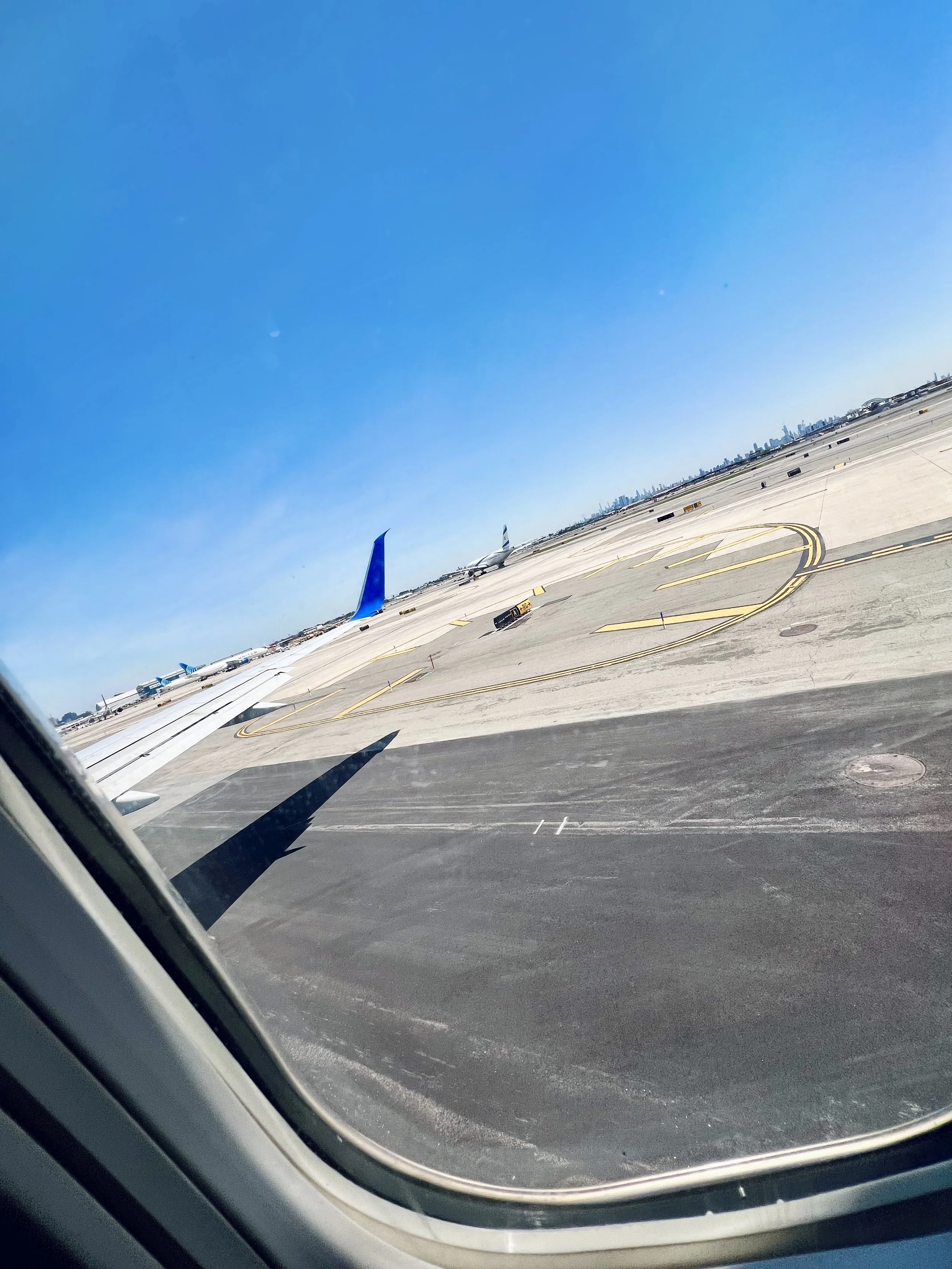
Window seat notes. Different ecosystems ask different questions because they are solving different problems. One of the benefits of moving between them is escaping the illusion that your local conversations represent the entire startup world. In an era where information is abundant, perspective may be the harder thing to find.